
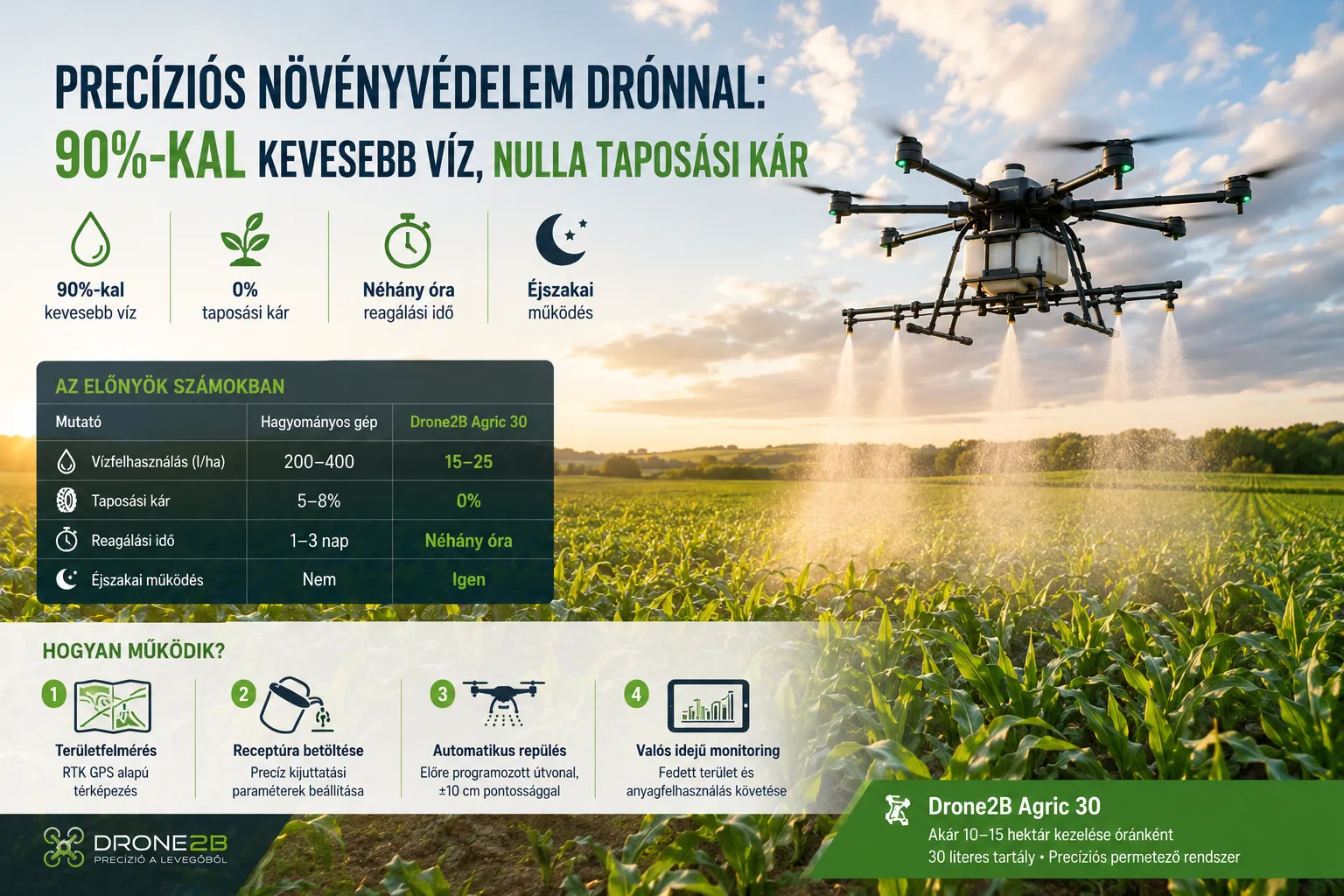
Crop protection spraying is one of the most costly and risk-laden operations in agricultural production. The sheer weight of conventional ground-based sprayers compacts the soil, creates trampling damage along wheel tracks, and chemical use is far from optimised. Precision drone spraying changes all of that.
How Drone Spraying Works
The Drone2B Agric 30, equipped with a 30-litre tank and precision spray system, can treat up to 10–15 hectares per hour. The process unfolds as follows:
- Area survey: RTK GPS-based mapping defines the field boundaries and terrain profile.
- Recipe loading: Application parameters (l/ha) are set based on the type of crop protection product and the height of the plant canopy.
- Autonomous flight: The drone follows a pre-programmed route with ±10 cm GPS accuracy.
- Real-time monitoring: The operator tracks covered area and material consumption on a tablet.
The Benefits in Numbers
Based on our own measurement data and partner feedback, drone spraying delivers the following results:
| Indicator | Conventional machine | Drone2B Agric 30 |
|---|---|---|
| Water use (l/ha) | 200–400 | 15–25 |
| Crop trampling damage | 5–8% | 0% |
| Response time | 1–3 days | A few hours |
| Night-time operation | No | Yes |
When Is It Especially Beneficial?
- Wet, muddy soil conditions — where ground machinery cannot enter
- Hilly or terraced terrain — where conventional equipment cannot manoeuvre
- Urgent interventions — rapid response to fungal outbreaks or pest sightings
- Night-time treatments — protecting bees by spraying after active flight hours
Interested in the technology? View the Drone2B Agric 30 specifications or request a custom quote.